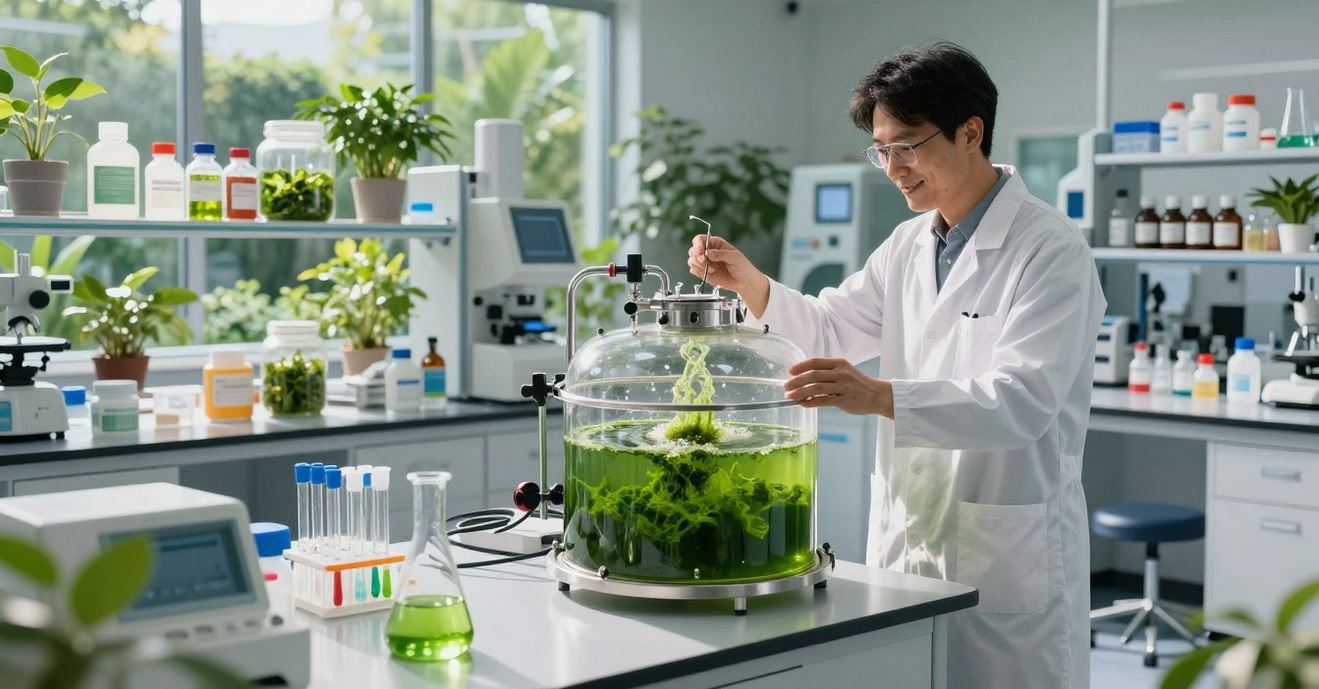
The world is changing quickly.Many companies are looking for new ways.The chemical industry must now be ecologically responsible.The aim is to save valuable resources and be economically successful.
nnnnSustainable chemistry offers great opportunities for a secure future.Many companies are improving their environmental footprint through modern approaches.This protects our planet and strengthens customer trust.
nnnnIn this article you will find out how green chemistry is changing the sector sustainably.You will learn about strategies for a clean and fair path.Discover impressive progress in this area with us.
nnnnKey findings
nnnn- n
- Conversion to modern and environmentally friendlyProcedure. nnnn
- Increased use of renewable raw materials in all areas. nnnn
- Effective reduction of waste and hazardous emissions. nnnn
- Continuous increase in general energy efficiency in operations. nnnn
- Promotion of innovations for long-term market success. nnnn
- Improvement of the CO2 balance through targeted, new strategies. n
Why sustainability is becoming essential for the chemical industry
nnnnClimate change is calling on the chemical industry to become more sustainable.This change is important for the environment and also brings economic benefits.
nnnnClimate targets and legal requirements
nnnnThe chemical industry emits a lot of greenhouse gases.Legal requirements and climate goals drive them towards sustainability.
nnnnnnnnn"Reducing CO2 emissions is an important step in limiting global warming,"
n
Dr.Martin Brudermüller, CEO of BASF
nnnnIndustry must increase energy efficiency. It must switch to renewable energies in order to achieve the climate goals.
nnnnSustainable methods protect the environment and save costs.Costs can be saved through energy efficiency.
nnnnThe switch to sustainability opens up new market opportunities.Early adaptation helps to benefit from these opportunities and remain competitive.
nnnnGreen chemistry is revolutionizing chemical production
nnnnGreen chemistry helps to develop more environmentally friendly chemical processes.She wants to reduce the environmental impact of the chemical industry.At the same time, efficiency and competitiveness should increase.
nnnnThe twelve principles of green chemistry at a glance
nnnnGreen chemistry is based on twelve principles.These were developed by Paul Anastas and John Warner.These include:
nnnn- n
- Prevention of waste: Waste should be reduced by optimizing reactions. nnnn
- Maximization of atomic economy: Chemical reactions should be sobe designed so that all atoms of the starting materials are contained in the end product. nnnn
- Development of safer chemical syntheses: The use of toxic substances should be reduced. nnnn
- Design of safer chemicals: Products should be less toxic and more environmentally friendly nnnn
- Use of renewable raw materials: Renewable raw materials should be used instead of fossil fuels. nnnn
- Energy efficiency: Chemical processes should be energy efficient in order to minimize energy consumption. n
These principles provide a framework for sustainable chemical processes and products.
nnnnSuccessful practical application examples
nnnnMany companies have implemented the principles of green chemistry. Some examples:
nnnn- n
- BASF: BASF has developed many processes based on green chemistry.This includes the production of plastics from biomass. nnnn
- Covestro: Covestro uses CO2 to produce plastics.This reduces the CO2 footprint. nnnn
- Evonik: Evonik has developed sustainable specialty chemicals.These are used in the cosmetics and pharmaceutical industries. n
These examples show that green chemistry offers practical solutions for a more sustainable industry.
nnnnEnergy transition in chemical plants:Renewable energies on the rise
nnnnThe chemical industry is experiencing a revolution.It uses renewable energies in its processes.This helps to reduce CO2 and achieve climate goals.
nnnnInnovative technologies for more energy efficiency
nnnnThe chemical industry needs a lot of energy.New technologies increase efficiency.In this way, systems can use less energy and reduce costs.
nnnnExamples of such technologies are:
nnnn- n
- Heat recovery systems nnnn
- Optimized process control nnnn
- Energy-efficient lighting n
Solar energy and wind power in theChemical production
nnnnSolar energy and wind power are becoming increasingly important in chemistry.They help to use less fossil fuels.
nnnnSome companies are building solar and wind farms. This reduces costs and supports climate goals.
nnnnHydrogen as the energy source of the future
nnnnHydrogen could be the future of energy.It is produced through electrolysis using renewable energy.
nnnn| Advantages ofHydrogen | Areas of application |
|---|---|
| Zero CO2 emissions during combustion | Chemical production |
| High energy content | Energy storage |
| Flexibility in application | Transportation sector |
Circular economy: From linear to circular production model
nnnnThe circular economy offers the chemical industry an opportunity to make better use of resources.It helps companies to minimize waste and remain competitive.
nnnnAn important part is the chemical recycling of plastics.This creates new products.This reduces the need for fossil raw materials.
nnnnChemical recycling uses chemical processes to break down polymers into monomers.
nnnnSome companies have already successfully implemented chemical recyclingSolvolysis or pyrolysis waste is converted into valuable raw materials.
nnnnZero-waste strategies in the chemical industry
nnnnZero-wastestrategies are a further step.They aim to avoid waste or use it as resources.Companies that do this save costs and improve their environmental performance.
nnnnChemical recycling, recovery and zero-waste strategies help the chemical industry to advance circular economy.This requires cooperation between companies, research and politics.
nnnnIntelligent water management in chemical companies
nnnnThe chemical industry must reduce its water consumption.It is looking for new solutions for water managementmany production processes.
nnnnAn intelligent water management uses various strategies.It aims to reduce water consumption and improve water quality.Water-saving production technologies and modern wastewater treatment systems are important.
nnnnWater-saving technologies help to use water more sustainably.Examples include:
nnnn- n
- Process optimization through simulation tools andData analytics nnnn
- Water cycle systems to recycle water nnnn
- Dry cleaning methods wherever possible n
These technologies reduce water consumption.They can also reduce production costs and increase efficiency.
nnnnModern wastewater treatment and water reuse
nnnnAn important part of water management is modern wastewater treatment. Advanced purification technologies make it possible to treat wastewaterto clean and recycle effectively.
nnnnThe technologies used are:
nnnn- n
- Membrane bioreactors for efficient biological purification nnnn
- Activated carbon adsorption to remove pollutants nnnn
- UV treatment to disinfect and remove micropollutants n
Through theReusing treated wastewater can reduce the need for fresh water.This brings economic and ecological advantages.
nnnnIn summary: Intelligent water management in chemical companies is possible.It combines water-saving technologies with modern wastewater treatment systems.This protects the valuable resource of water and supports the sustainability goals of the industry./wp:paragraph -->nnn
Biotechnology and bio-based raw materials on the rise
nnnnBiotechnology and bio-based raw materials are important steps towards sustainability in chemistry.They offer an alternative to conventional methodsreduced.
nnnnAn important point is the use of enzymes and microorganisms as sustainable catalysts.They reduce energy consumption and reduce unwanted by-products.
nnnnEnzymesand microorganisms as sustainable catalysts
nnnnEnzymes accelerate chemical reactions without disappearing themselves.They are very specific and efficient.Microorganisms such as bacteria and yeast can also serve as catalysts.
nnnnnnnnnThe use of enzymes and microorganisms makes chemistry more sustainable. It reduces the need for harsh chemicals and high temperatures.
n
An example is the production of biofuels with enzymes.They facilitate the conversion of biomass into energy.
nnnn| Advantages | Enzymes | Microorganisms |
|---|---|---|
| Efficiency | High specificity andReaction speed | Complex reactions possible |
| Environmentally friendly | Mild reaction conditions | Reduced chemical requirements |
| Costs | Lower energy costs | Less waste production |
Renewable raw materials replace fossil raw materials
nnnnThe use of renewable raw materials is another important point.Plants and algae are a sustainable alternative to fossil resources.
nnnnUsing biomass reduces dependence on fossil resources.This reduces the chemical industry's CO2 footprint.
nnnnIn summary, biotechnology and bio-based raw materials are key to a more sustainable chemical industry.Innovative technologies and processes reduce environmental impact.They also increase efficiency and competitiveness.
nnnnDigitalization as a driver for sustainable chemical production
nnnnChemical production is experiencing a revolution thanks to digital technologies.This revolution increases sustainability and efficiency.The industry uses innovative approaches to minimize environmental impacts and increase productivity.
nnnnOptimization through artificial intelligence
nnnnArtificial intelligence (AI) is important for optimization in the chemical industryIndustry. AI analyzes large amounts of data, recognizes patterns and makes predictions.This leads to more efficient use of resources and less waste.
nnnn- n
- Process optimization through data-driven decisions nnnn
- Prediction of maintenance requirements to avoid failures nnnn
- Automation of routine tasks to increase productivity n
Digital twins for resource-saving production
nnnnDigital twins are an important aspect of digitalization in chemistry.These virtual images of processes make it possible to experiment and optimize without any real impact.This leads to less resource consumption and waste.
nnnnAdvantages of digital twins:
nnnnPioneers of sustainability: German chemical companies are setting standards
nnnnGerman chemical companies are leading the way in sustainable production.They prove that business and the environment can go together.
nnnnBASF on the way to climate-neutral production
nnnnBASF is a pioneer in the chemical industry.It strives for climate-neutral production.They rely on innovative technologies.
nnnnAn important step is the use of renewable energies. They also optimize their production processes.
nnnnCovestro and the use of CO2 as a raw material
nnnnCovestro uses CO2 to produce plastics.This approach helps reduce CO2 emissions.It also reduces dependence on fossil raw materials.
nnnnThe company develops sustainable materials.These are used in many areas.
nnnnEvonik with sustainable specialty chemicals
nnnnEvonik focuses on sustainable specialty chemicals.These are useful in many industries.The environmental impact is reduced through renewable raw materials and efficient processes.
nnnnMedium-sized companies as innovative pioneers
nnnnMedium-sized companies are also important in sustainable chemistry.They develop and implement innovative solutions.
nnnn| Company | Sustainability initiatives | Goals |
|---|---|---|
| BASF | Climate neutralProduction | Reducing the CO2 footprint |
| Covestro | Using CO2 as a raw material | Reducing dependence on fossil raw materials |
| Evonik | Sustainable specialty chemicals | Minimizing theEnvironmental impact |
Conclusion
nnnnThe chemical industry is facing major change.She wants to work more sustainably.In this way, it can better protect the environment and be economically successful at the same time.
nnnnGreen chemistry, renewable energies, circular economy and digitalization are important for the future.Companies like BASF, Covestro and Evonik show that sustainability is possible.They prove that it also makes economic sense.
nnnnThe chemical industry must quickly become more sustainable.It can reduce CO2 emissions and save resources.It achieves this through renewable energy, circular economy and green chemistry.
nnnnFAQ
nnnnWhy is the shift to sustainable practices for chemical companies todayimportant?
nnnnThere are two reasons.On the one hand, companies have to emit fewer greenhouse gases due to strict laws and climate targets.On the other hand, they can save energy and open up new markets. This is how they remain competitive.
nnnnWhat lies behind the twelve principles of green chemistry?
nnnnGreen chemistry wants to make chemical production safe and environmentally friendly.The twelve principles help to avoid waste and save resources.The aim is to protect the environment during production.
nnnnWhat role does hydrogen play in the energy transition in industry?
nnnnHydrogen will be very important in the future.It can replace fossil fuels and serve as a clean raw material.He can use solar energy and wind power to produce basic chemicals with low CO2 emissions.
nnnnHow does the circular economy contribute to conserving resources?
nnnnCircular economy wants to switch from disposable to recycling.Through recycling, plastics can be broken down into their components and used again.This keeps valuable raw materials in circulation.
nnnnHow can digital technologies specifically improve sustainability?
nnnnDigital technologies accelerate sustainability.Artificial intelligence optimizes processes and reduces energy consumption.Digital twins test new processes in a resource-saving manner before they are actually implemented.
nnnnWhich German companies are considered pioneers for green chemical production?
nnnnGermany has pioneers like themBASF, Covestro and Evonik.BASF wants to be climate neutral by 2050.Covestro uses CO2 for sustainable plastics.Evonik develops environmentally friendly specialty chemicals.
nnnnHow do biotechnology and enzymes help in the production of chemical products?
nnnnBiotechnology uses nature as a model.Enzymes and microorganisms are sustainable catalysts.They enable chemical reactions at lower temperatures and replace fossil raw materials.
nnnnWhat are chemical companies doing to improve water management?
nnnnModern companies save water through new technologies.They use closed circulation systems.This means that used water is treated and reused, which protects the environment.
nnnnn